Italiano
 Français
Year 138 - July-August 2026Find out more
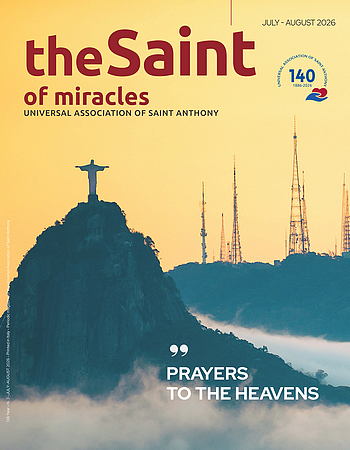
Background noise
Fr. Livio Tonello, director

The chaotic life of our cities produces constant, annoying and sometimes deafening noise capable of wearing down one’s health. Not even living in apartment blocks offers respite; clattering, loud music and shouting generate daily tensions and conflicts. However, there are sounds to which one becomes accustomed over time. They become part of the daily landscape, permeating the environment, and eventually one no longer notices them, as if the brain were raising a defensive barrier. This happens to those who live near railway tracks or close to a factory; those background noises cease to be perceived.
The same mechanism kicks in when faced with world events. Gradually, adaptation sets in when confronted with history’s tragedies. This applies to wars that have dragged on for years, the incessant tragedies of migration and violence against people, as well as what happens in ordinary daily life, such as domestic abuse, bullying among the very young and workplace deaths. The media constantly talk about these things, yet the result is that we no longer take notice. Thus, even evil becomes background noise: once the initial shock has passed, everything fades into the background.
Immense tragedies unfold against the backdrop of our existence, but the ‘ears of the heart’ no longer perceive them. The philosopher Hannah Arendt (1906-1975) coined the phrase ‘the banality of evil’ to describe an inability to think critically, a reluctance to reflect on the moral implications of one’s actions and an inability to empathise with others. The roots of evil lie in seemingly ordinary phenomena such as passivity, conformity and thoughtlessness. This is how ordinary people can become accomplices to atrocious crimes, growing indifferent to the trampling of values.
One of the great failings of our society is that the level of moral awareness is falling dangerously. We now regard certain degrading behaviours, language and lifestyles as ‘normal’, without considering the consequences. Had Saint Anthony turned his back on the injustices of his time, he would not have spoken out so fiercely against usury, tyranny and poverty. His example challenges us today to silence the background noise and rekindle our conscience.
Read articles
Magazine ArchiveRead more